I-Wok Pro Screen Bar
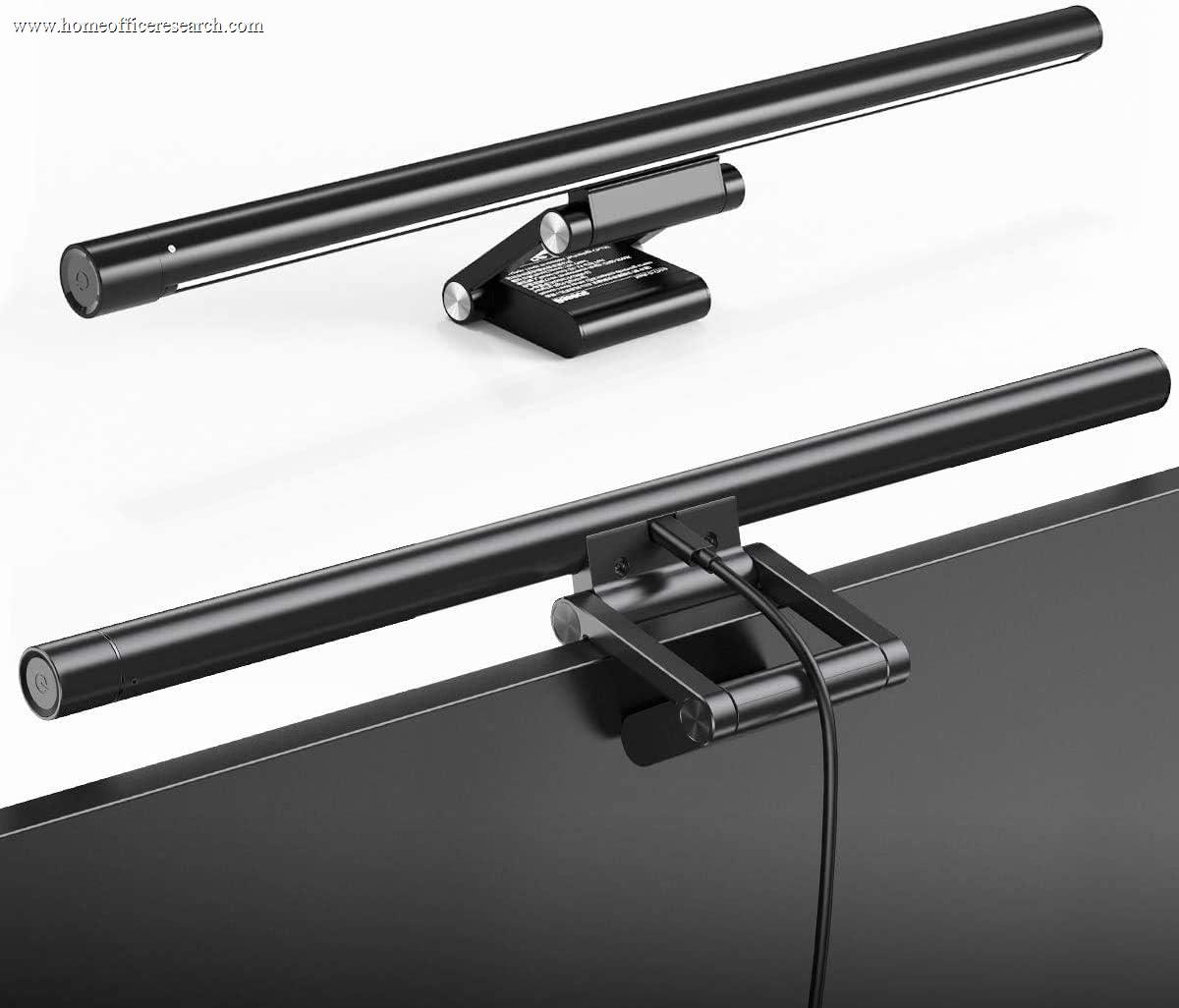
The Baseus I-Wok Pro publishes the highest CRI in our entire comparison — Ra97 — at a budget price. It’s a screen bar format with asymmetric optics, continuous stepless dimming, and a 3000–6500K color temperature range. These are genuinely impressive numbers for the price. The Tier 3 placement comes down to one thing: its flicker-free claim is a manufacturer assertion without published IEEE certification. For buyers who need verified eye safety for all-day use, this gap matters. For buyers who primarily need exceptional color rendering for bright tasks, it’s a genuine bargain.
How We Scored It
Category Deep-Dives
Light Quality
8.0 / 10 30% weightingCRI Ra97 is the headline specification — the highest color rendering index of any lamp in our 13-product comparison, including the BenQ ScreenBar Pro at CRI 95+. Ra97 means color accuracy is near the limit of what LED technology currently offers. For users doing color-critical work — photo editing, graphic design, or any task where color accuracy matters — this specification is genuinely meaningful.
The 3000–6500K temperature range is good but slightly limited at the warm end. The 3000K floor versus 2700K on the BenQ and Xiaomi means slightly less flexibility for warm evening illumination. Maximum lux output is not published by Baseus, which is a transparency limitation — we cannot confirm exactly how it performs against competitors with published figures.
Bottom line on light quality: The best CRI in the comparison at the lowest price. Lux output is unverified due to absent manufacturer data. The 3000K warm floor is a minor limitation.
Adjustability & Control
7.0 / 10 25% weightingContinuous stepless dimming across the 3000–6500K range is the correct specification, and Baseus implements it properly. Touch controls on the lamp bar are straightforward. The screen bar form factor means positioning is fixed to the monitor top — no arm adjustment, by design.
The 3000K warm floor means the I-Wok Pro can’t reach the warmest, most relaxed illumination mode that lamps with a 2700K floor provide. For users who want maximum warm-light versatility, this is a real limitation. For users who primarily work during daytime hours, it’s largely irrelevant.
Bottom line on adjustability: Stepless dimming is correctly implemented. The 3000K temperature floor is a tangible limitation compared to 2700K competitors.
Eye Comfort
4.5 / 10 20% weightingThis is the decisive limitation. Baseus claims flicker-free operation but has not published IEEE PAR 1789 certification data or a third-party test report. In our framework, a manufacturer assertion without documentation is rated “Claimed” — one step above “Unverified” but well below “Tested” or “Certified.”
The flicker-free gap matters most at low brightness settings, where PWM dimming artifacts are most pronounced. If you use the lamp primarily at high brightness, unverified flicker performance is less consequential. If you use it at low brightness during evening work — which is precisely when the 3000K warm mode would be engaged — the risk of PWM artifacts is highest. For users with any history of screen-related eye strain, this unverified claim is the single reason to step up to a certified option.
The asymmetric optics design prevents monitor screen glare, which does provide a genuine eye comfort benefit that compensates partially for the flicker uncertainty.
Bottom line on eye comfort: The flicker-free claim without independent verification is the reason this lamp sits in Tier 3. For all-day use by users sensitive to eye fatigue, this is a meaningful gap. For users who work primarily at high brightness, the risk is lower.
Build & Design
6.0 / 10 15% weightingThe I-Wok Pro is a screen bar format lamp — clip mount, counterbalanced, asymmetric optics, desk-surface-only illumination. The form factor is correct for monitor-centric workspaces, and the asymmetric optics genuinely eliminate screen glare. At its budget price, the build materials are expectably modest: plastic body, basic clip mechanism. The clip holds adequately for monitors in the standard thickness range.
The design is clean and inoffensive. No USB charging port is included, which is a missed convenience at any price tier but especially noticeable when cheaper alternatives include one.
Bottom line on build: Correct form factor, adequate execution at the price. No USB port is a small miss for a screen bar.
Value
8.5 / 10 10% weightingThe I-Wok Pro is one of the lowest-priced lamps in our comparison. CRI 97 at this price is extraordinary — no other lamp at any price in our comparison reaches this specification. Continuous dimming and a screen bar form factor at this price are genuinely competitive. The value score reflects what you get for the price on paper — the caveat is that the uncertified flicker claim is the discount you’re accepting for it.
For buyers who know they’re comfortable with the flicker uncertainty — primarily users doing color-critical work who care most about CRI — this represents exceptional value per specification. For all-day home office users with eye comfort as a priority, the certified alternatives are worth the premium.
Bottom line on value: Exceptional CRI-per-dollar ratio. The value only holds if the flicker uncertainty is acceptable for your use case. For color-critical work at high brightness, this is probably the best budget money you can spend on desk lighting.
About the Manufacturer
seus
Baseus is a Chinese consumer electronics accessories brand with a broad product range spanning charging cables, power banks, desk accessories, and lighting. The I-Wok series is their desk lighting line, designed to compete directly with BenQ’s screen bar lineup at a fraction of the price. Baseus competes on specification-per-dollar rather than brand premium or certification rigor.
The I-Wok Pro’s Ra97 CRI specification is the most credible performance claim in their lighting lineup — a specification that, if accurate, genuinely exceeds more expensive competitors. The absence of published flicker certification is a consistent pattern across budget Chinese electronics brands, reflecting either the cost of third-party testing or commercial preference for unverified claims. For buyers who evaluate products empirically rather than on certification alone, Baseus offers compelling price-to-spec ratios with corresponding documentation gaps.