Best Home Office Chairs:
Rated & Ranked
We evaluated 13 home office chairs across six weighted categories — from lumbar support and ergonomic adaptability to long-term build quality and value. Every score is derived from measurable specifications and established expert consensus, not subjective impressions. The result: a defensible, comparable 0–10 rating across the full price spectrum, from budget models to premium flagships.
Amazon product links are affiliate links — purchases support this site at no cost to you. Some chairs are sold direct-only and are linked to the manufacturer’s site without affiliate compensation.
The ranking below uses our recommended weights — the balance of factors we believe matters most for a typical home office. If your priorities differ, switch to Customize Weights and re-rank the table around what you care about.
Full Comparison — Sorted by Score
| # | Product | Score | Back Material ? | Lumbar ? | Arms ? | Seat Depth Adj. ? |
Warranty ? |
|---|---|---|---|---|---|---|---|
| ▸ Premium — Best-in-Class Ergonomics | |||||||
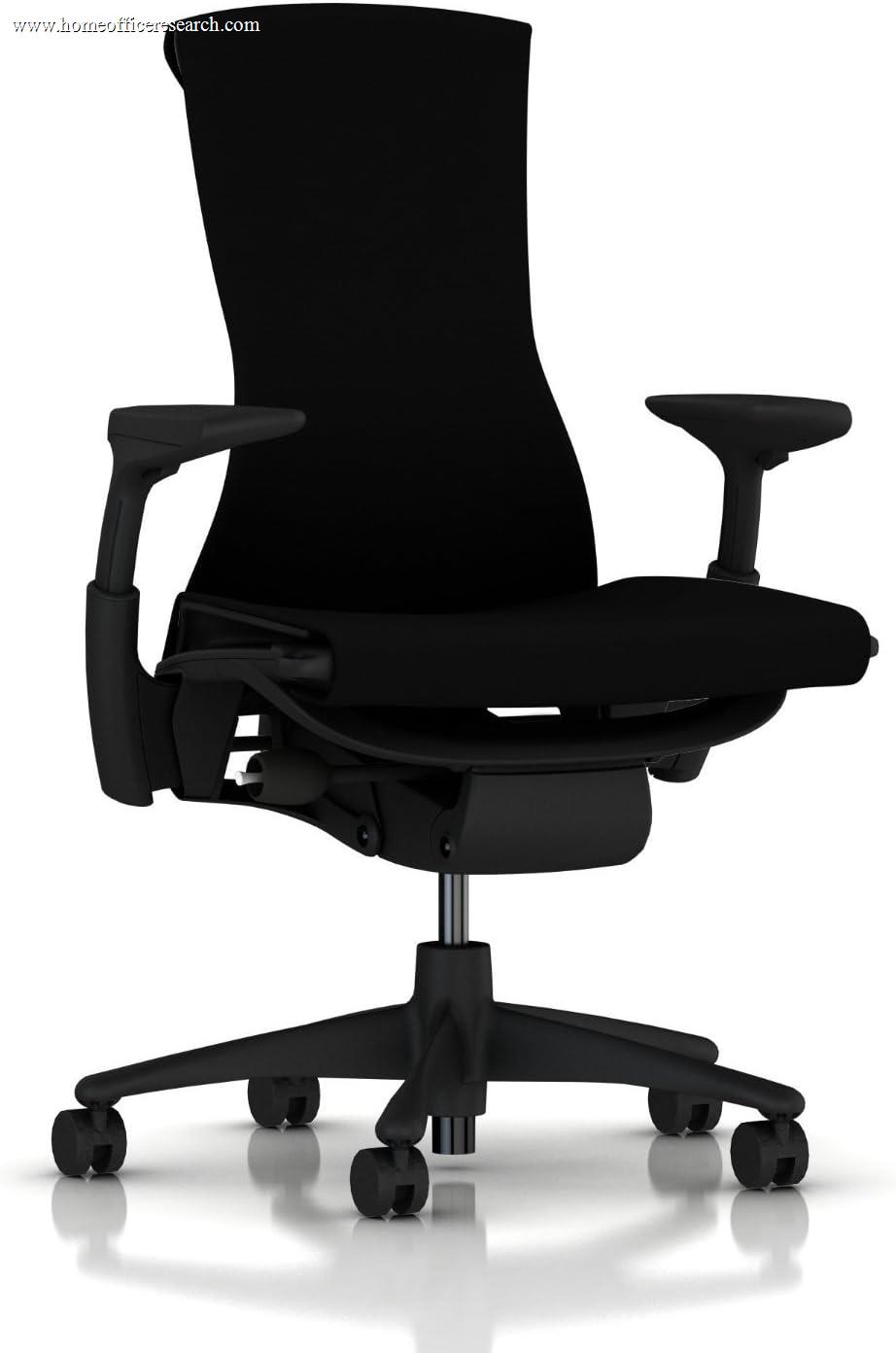
| 1 |
|
8.8/10 |
Foam/Fabric | Core Equalizer + opt. adj. | 360° (5D) | Yes | 12 yr |
| 2 |
|
8.6/10 |
Mesh | Built-in + opt. 3.5″ adj. | 4D | Yes | 12 yr |
| 2 |
|
8.6/10 |
Mesh | PostureFit SL | 4D | Yes | 12 yr |
| 4 |
|
8.5/10 |
Foam/Fabric | LiveBack® + adj. lumbar | 4D | Yes | 12 yr |
| 5 |
|
8.4/10 |
Mesh | PostureFit sacral | 2D (no depth adj.) | Yes | 12 yr |
| ▸ Mid-Range — Strong Value, Capable Ergonomics | |||||||
| 6 |
|
8.0/10 |
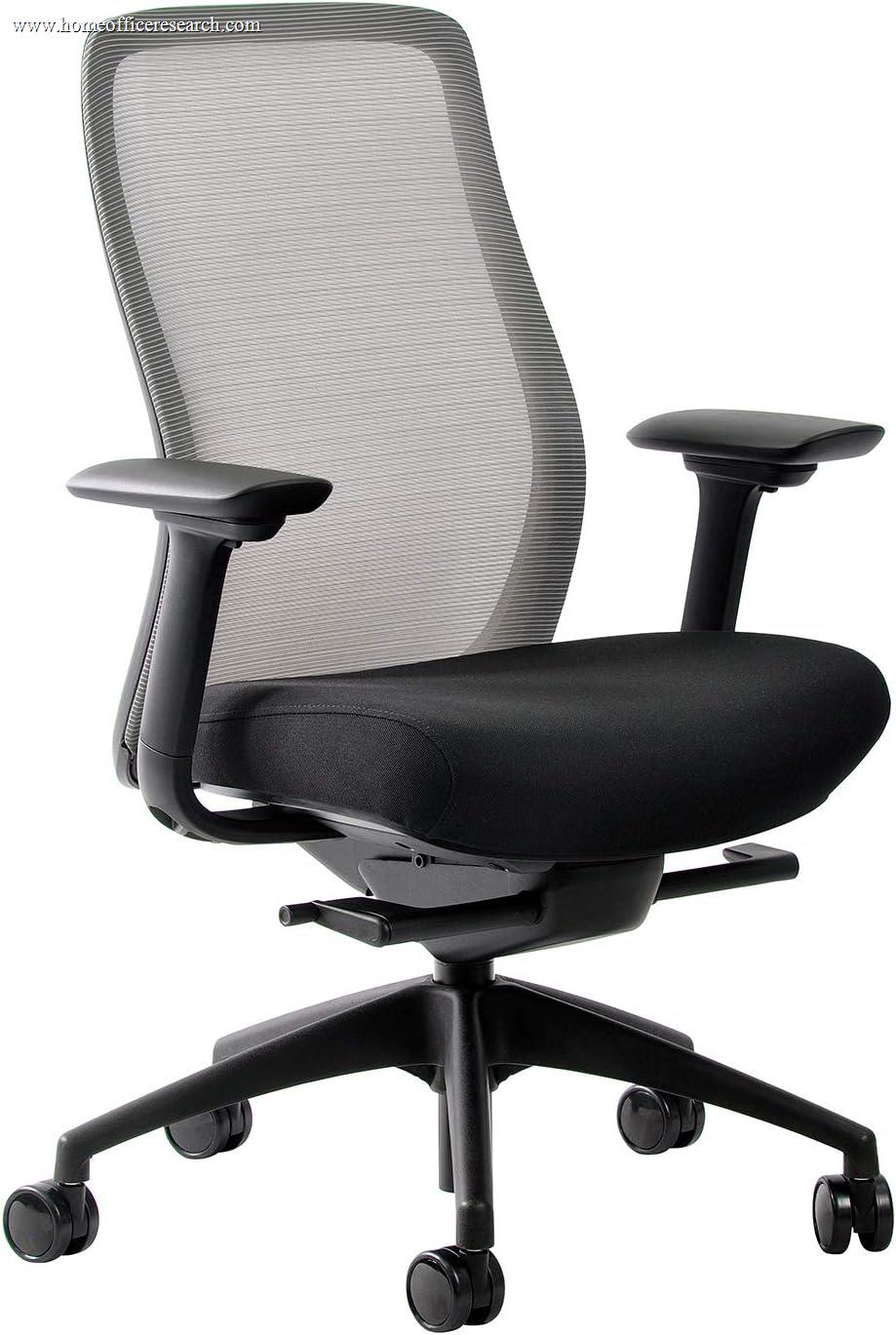
Mesh | Built-in curve (passive) | 6-way | Yes | Lifetime* |
| 7 |

|
7.7/10 |
Hybrid Leather | Integrated + MagLumbar | 4D | Yes | 3 yr (5 w/ reg.) |
| 8 |
|
7.4/10 |
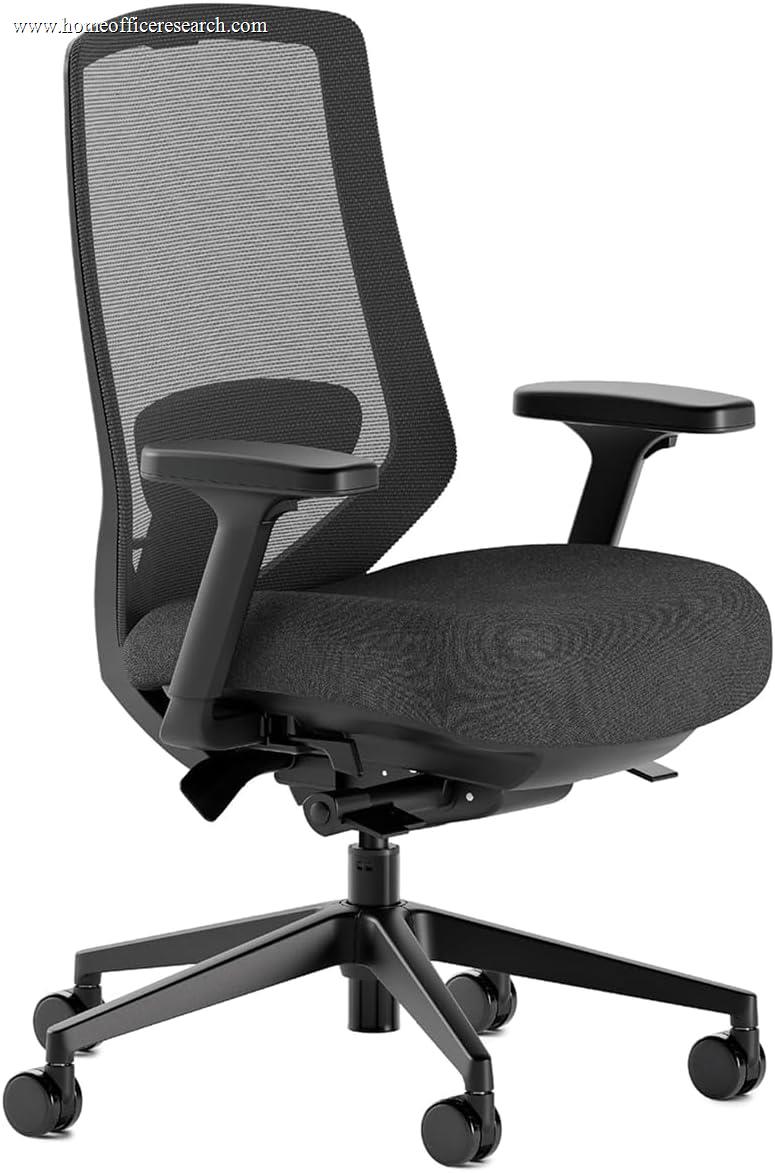
Mesh | Adj. height + depth | 4D | Yes | 5 yr |
| 9 |
|
7.4/10 |
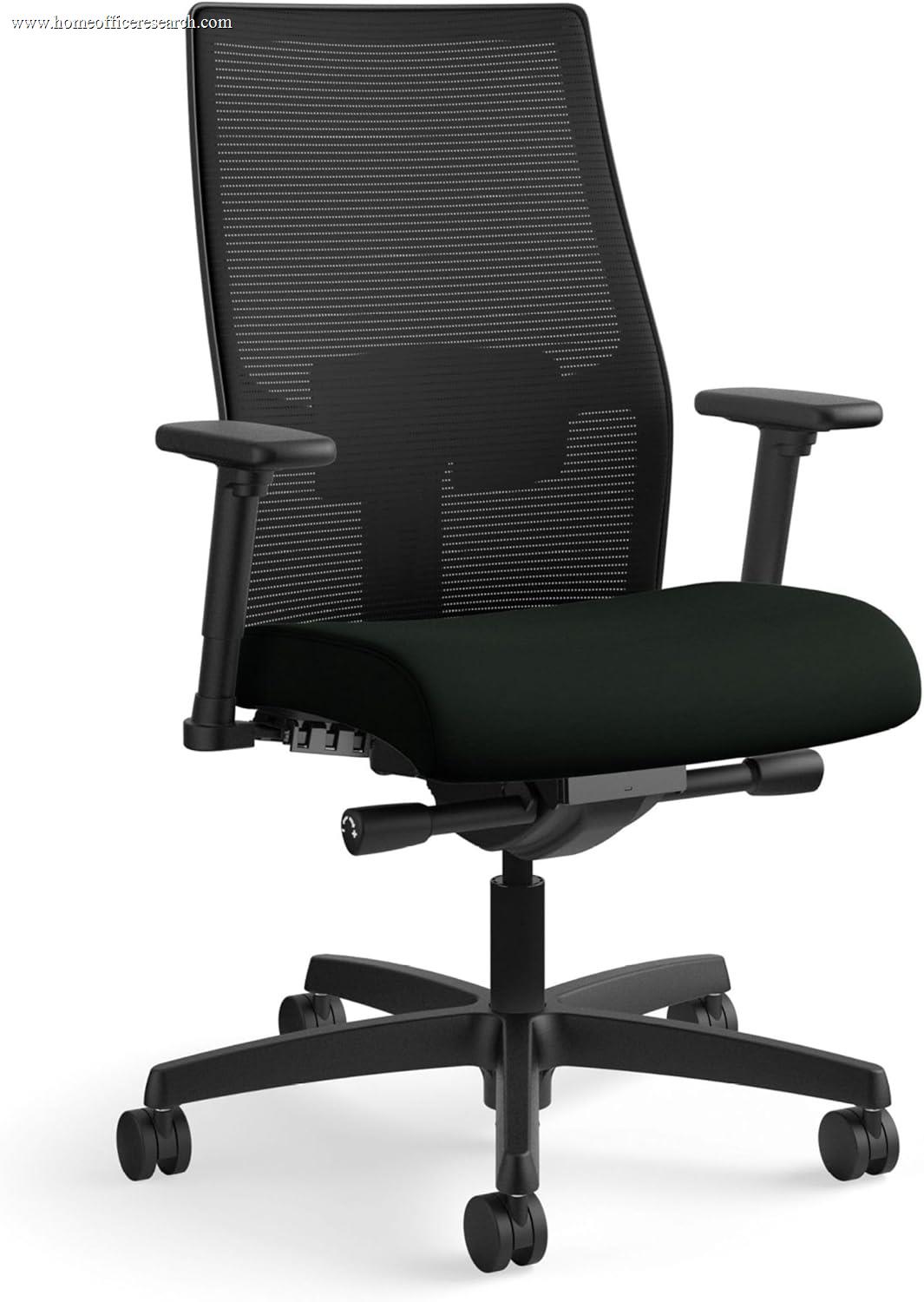
Mesh | Adj. height (plastic) | 2D (H + W) | Yes | Lifetime |
| 10 |
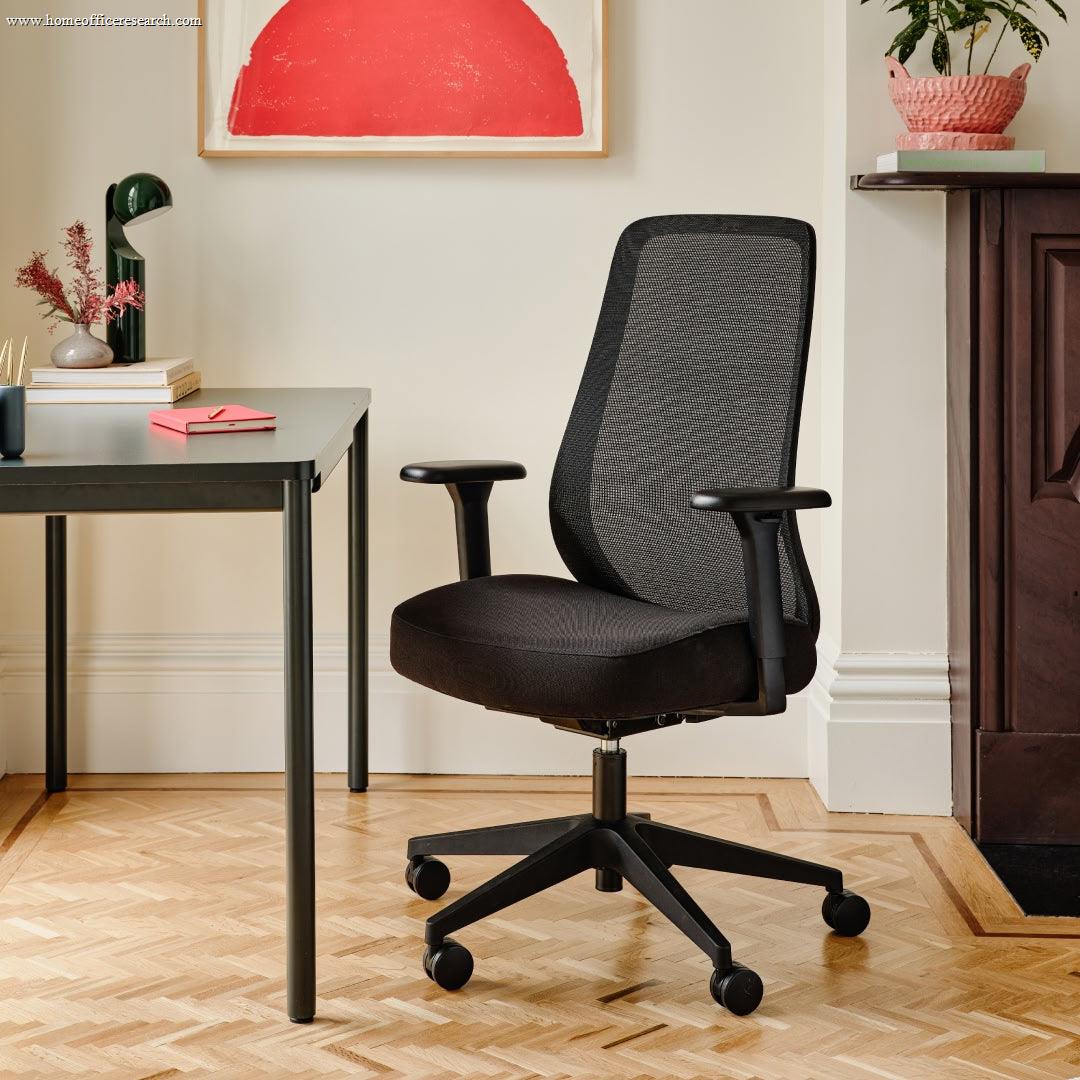
|
7.0/10 |
Mesh | Fixed | 3D | No | 5 yr |
| ▸ Budget — Entry-Level & Light-Duty Use | |||||||
| 11 |

|
6.9/10 |
Mesh | Adj. height | 3D | No | 2 yr |
| 12 |
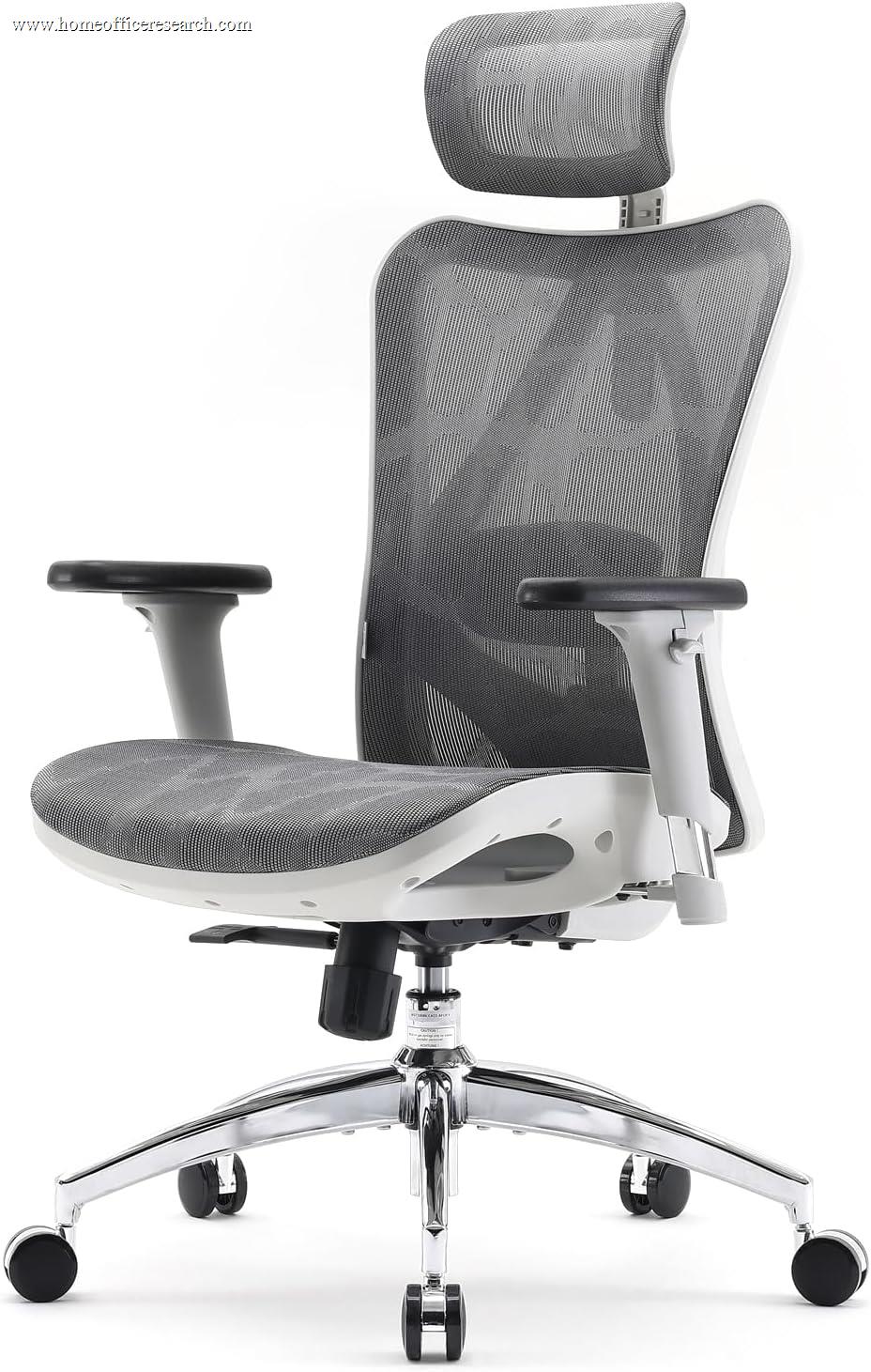
|
6.9/10 |
Mesh | Adj. height + depth | 3D | No | 3 yr |
| 13 |
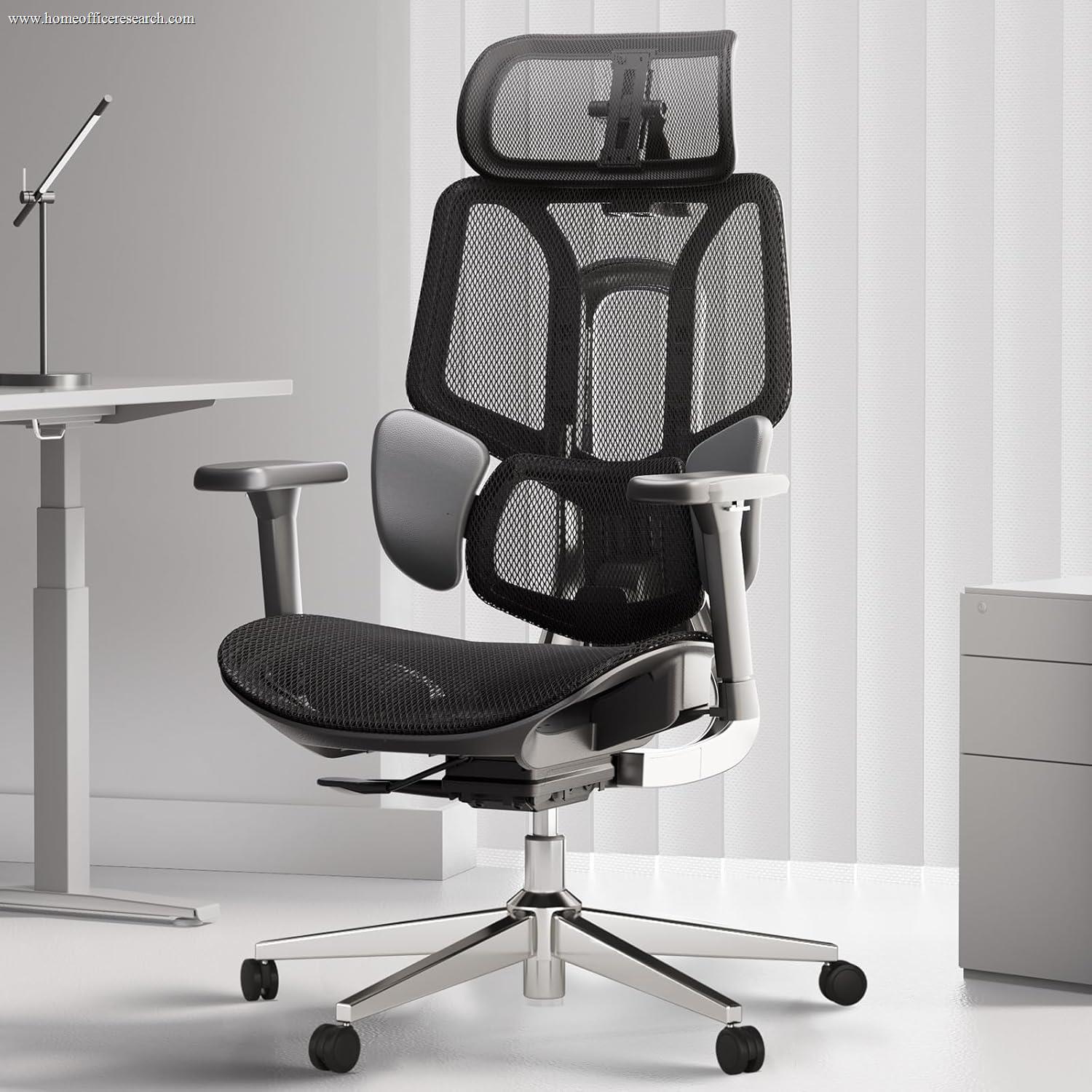
|
6.4/10 |
Mesh | 3-zone adj. | 6D | Yes | 3 yr |
How We Score
Weighted Scoring Framework — All Scores 0–10
Key Considerations When Choosing a Chair
Lumbar Support — The Most Important Feature
The lumbar region — the inward curve of your lower spine — loses its natural curve when you sit without support. Over time, this flattening increases disc pressure and contributes to lower back pain, the most commonly reported occupational health complaint among office workers.
Adjustable lumbar support in both height and depth allows the chair to match your unique spinal geometry. A lumbar pad positioned too high or too low can be worse than none at all. Height adjustment is the minimum; depth (or pressure) adjustment is the meaningful differentiator among better chairs.
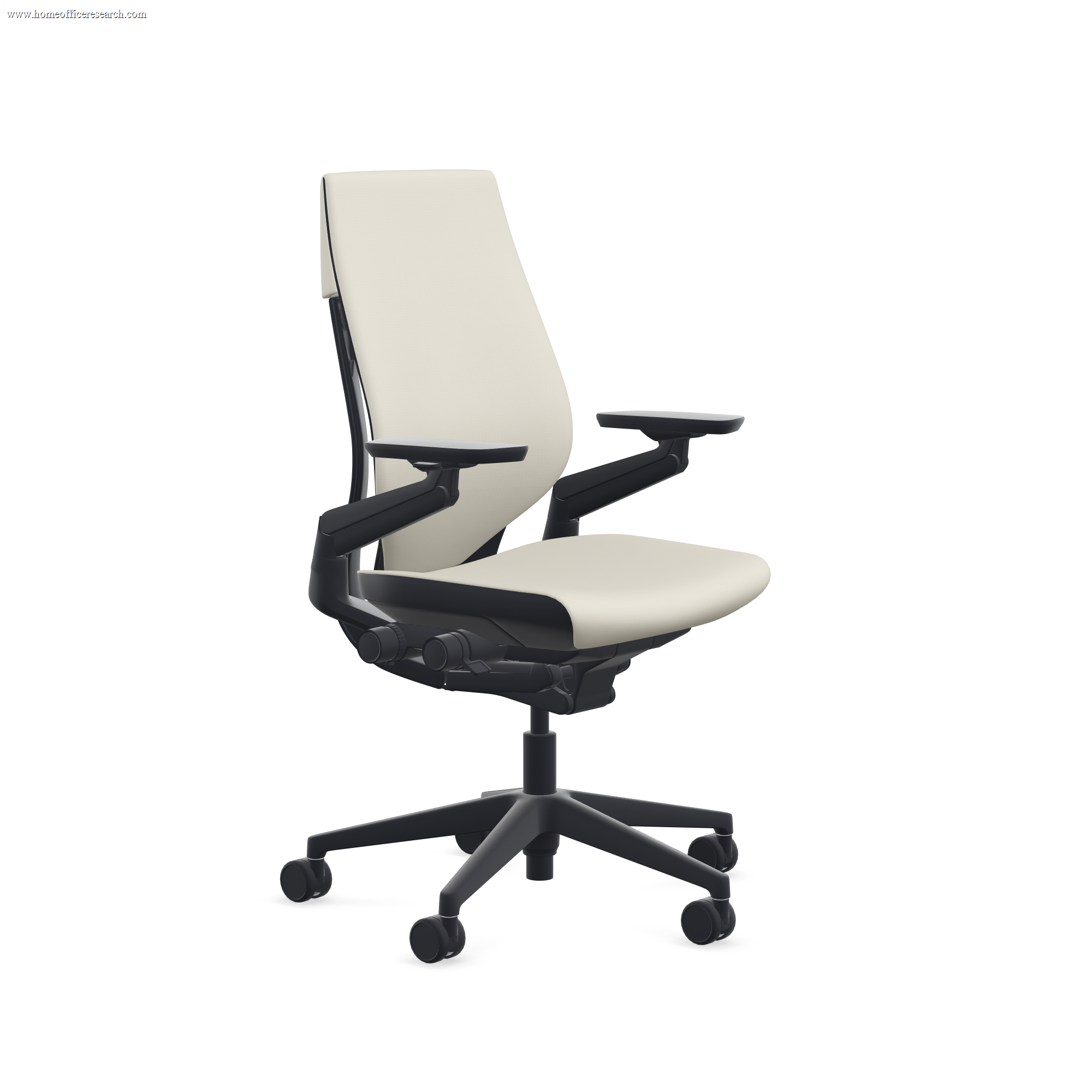
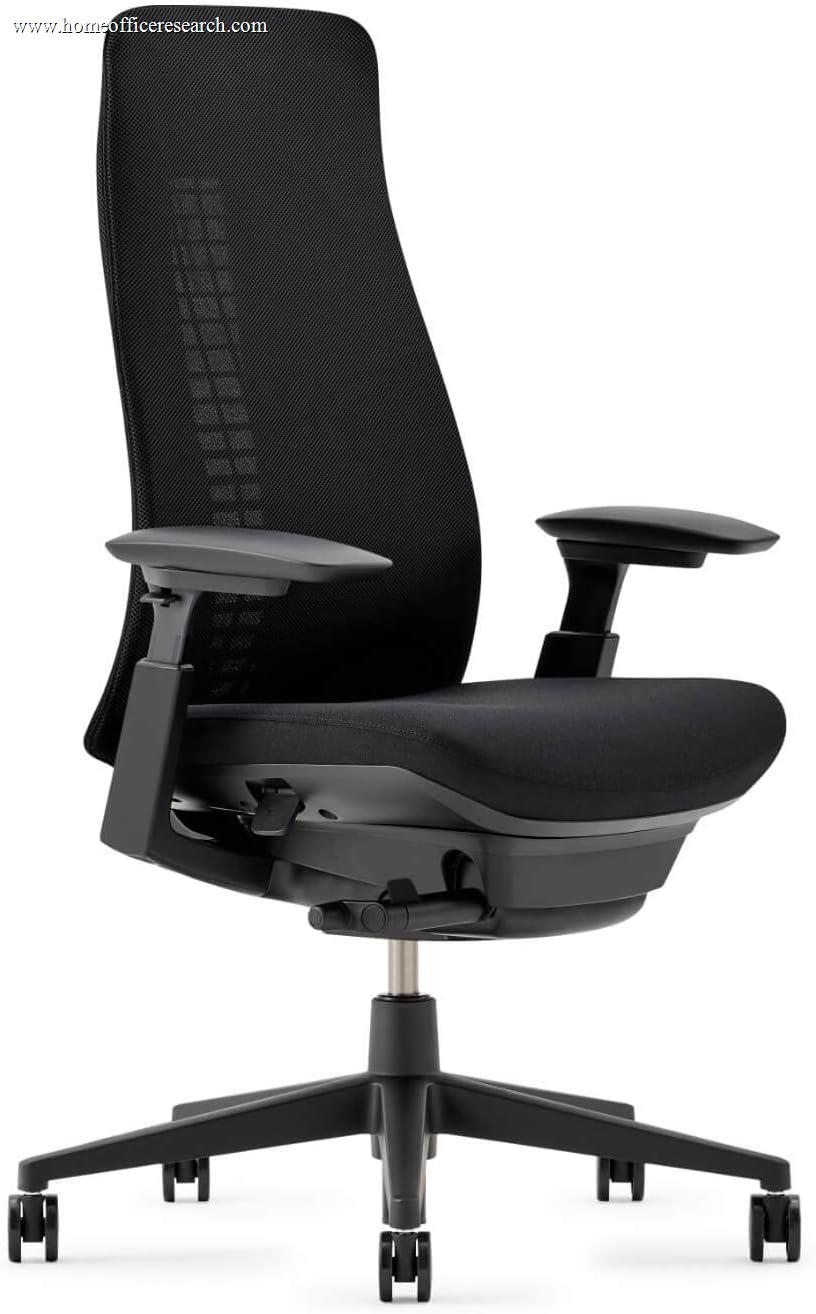
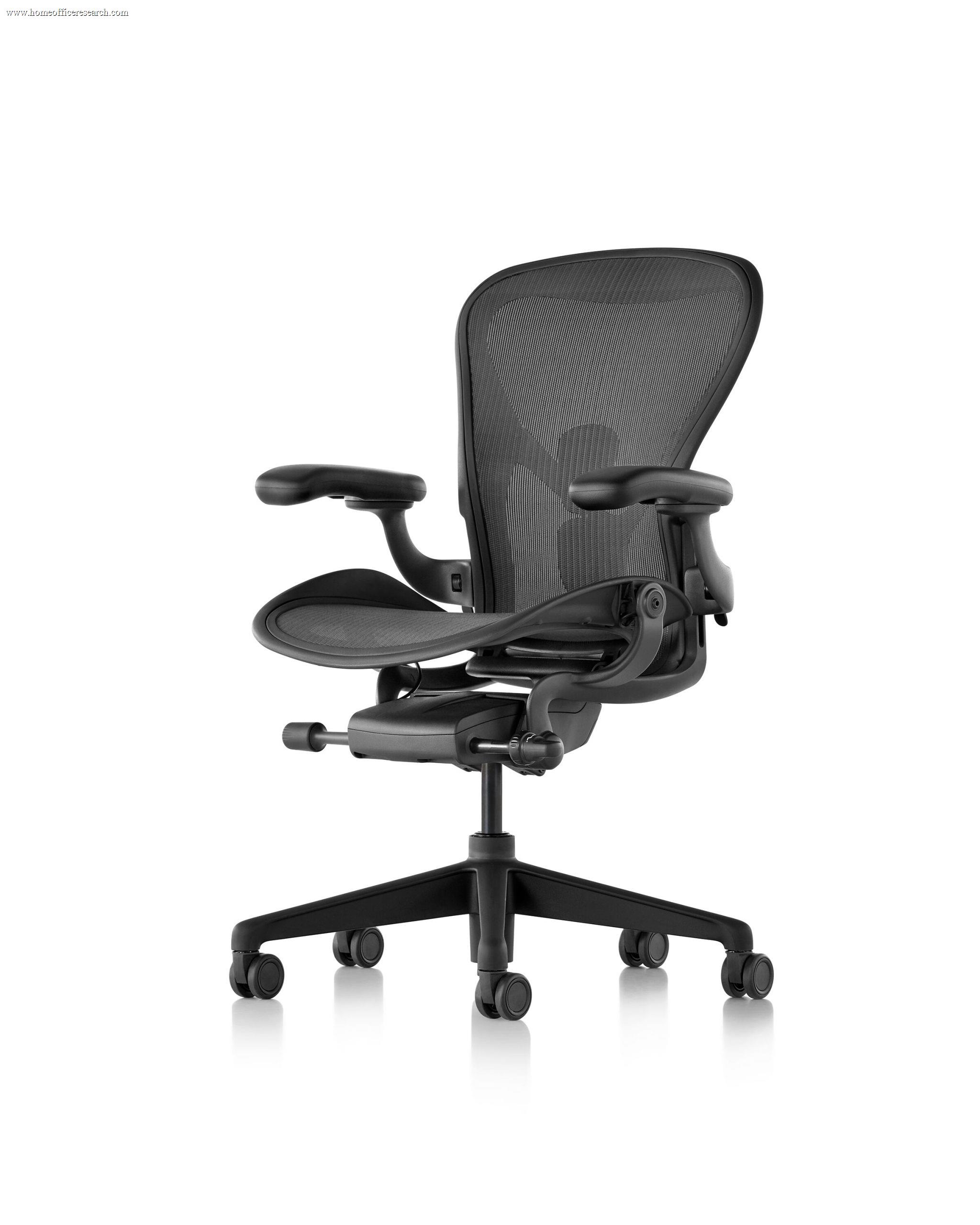
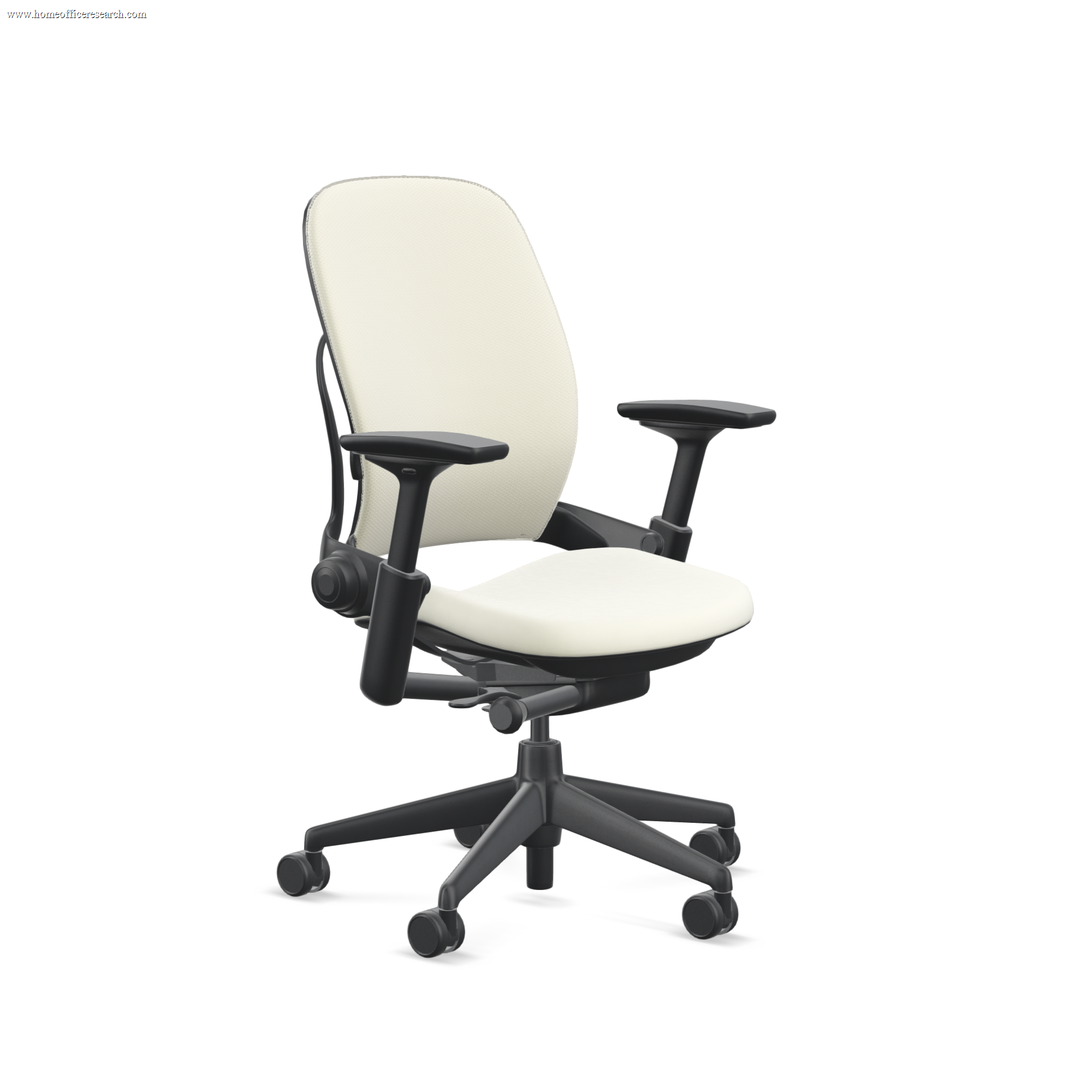
Herman Miller’s PostureFit SL (Aeron) supports both the lumbar and sacral zones independently. The Embody’s Backfit system adjusts the entire spine angle dynamically rather than using a discrete lumbar pad. Steelcase’s LiveBack® (Leap and Gesture) uses a flexible backrest that follows movement in real time. Haworth’s Wave Suspension System distributes support from neck to pelvis through independent flexible fronds, eliminating the need for a separate lumbar mechanism entirely.
The Eurotech Vera is notable for providing strong passive lumbar support through the natural curve of its frameless mesh — independent long-term reviewers consistently rank it among the most comfortable backs at its price, despite the absence of an explicit adjustment mechanism.
Bottom line: Prioritize adjustable lumbar support above almost any other feature. It is the single component most directly linked to long-term spinal health during extended office use.
Armrests — Why Degrees of Freedom Matter
Armrests serve one primary function: reducing the load on your shoulder and neck muscles. Without support, the weight of your arms is sustained entirely by shoulder musculature, which fatigues over a full workday.
2D arms adjust height and width. 3D arms add fore-aft pivot. 4D arms additionally rotate on a vertical axis, accommodating angled typing positions. 5D/6D arms add further diagonal movement. The Steelcase Gesture is notable for its exclusive 360° arms — the widest range of any chair tested — which rotate continuously to follow your arm position regardless of posture or device.
For most home office users, 4D arms represent the useful ceiling. The marginal benefit of 5D and 6D arms is real but narrow — primarily relevant for users with specialized setups or frequent multi-device switching. The Hbada E3’s 6D arms provide impressive specification coverage but have attracted durability concerns in independent reviews.
Bottom line: For serious home office use, 4D arms are the recommended minimum. Simple 2D arms — as found on the HON Ignition 2.0 — often compromise posture by preventing proper elbow positioning across different desk heights and tasks.
Mesh vs. Foam — Materials and Breathability
The two dominant back and seat materials in ergonomic chairs are tension mesh and high-density foam, each with meaningful tradeoffs.
Mesh backs are breathable — air circulates through the weave, preventing heat buildup. High-quality mesh (Herman Miller’s 8Z Pellicle, Haworth’s Wave Suspension weave) conforms progressively to the back’s shape. Lower-quality mesh may sag or lose tension within a few years. The SIHOO M57’s mesh construction is generally praised for being denser and more durable than similarly priced competitors.
Foam-padded backs offer a softer feel. Steelcase’s Leap and Gesture use foam-over-frame backrests with dynamic flex built into the structural design rather than the material — achieving movement without relying on mesh elasticity. The Eurotech Vera’s high-density foam seat cushion is specifically and consistently noted as unusually comfortable for a chair at its price, separate from its well-regarded mesh back.
Bottom line: In warm offices, mesh backs offer a meaningful breathability advantage. Seat cushion density matters as much as back material — several chairs with excellent mesh backs ship with compressed-foam seats that cause pressure points within an hour.
Warranty & Longevity — Total Cost of Ownership
A premium ergonomic chair is a capital purchase, not a consumable. Herman Miller, Steelcase, and Haworth all offer 12-year warranties on their flagship models — backed by decades of real-world ownership data. The refurbished market for Aeron, Leap, Gesture, and Embody chairs is well-established, with dealers like Crandall Office offering professionally renewed units with 12-year warranties at 40–60% of new pricing.
Eurotech offers a lifetime warranty on structural components (5 years on foam and fabric) — meaningful for its price tier. HON offers a limited lifetime warranty. The SIHOO M57 and Hbada E3 offer 3-year warranties, which is appropriate given their component quality but significantly shorter than the premium tier.
One note on the Hbada E3 specifically: the chair is listed at a high MSRP but is almost perpetually discounted to little more than half that. The inflated MSRP creates a false sense of discount value — the chair should be evaluated against its actual (much lower) street price, where it competes directly with the Branch Ergonomic Chair Pro and HON Ignition 2.0 in this guide.
Bottom line: Evaluate chairs on a cost-per-year basis, not purchase price alone. A premium Aeron used for 12 years amortizes to a modest cost per year of service. A cheaper chair replaced every 3 years can cost even less per year — but with meaningfully inferior ergonomic support. For a primary work chair used 6–8 hours daily, that tradeoff has real health implications worth calculating explicitly.
Seat Depth — An Underrated Fit Variable
Proper seat depth means your back makes contact with the backrest while leaving 2–4 fingers of clearance between the seat edge and the back of your knees. A seat that is too deep forces a choice: lose lumbar contact or compress the back of the knee — both problematic over time.
Among the chairs in this guide, seat depth adjustment is present on all premium models and several mid-range options including the Haworth Fern, Eurotech Vera, HON Ignition 2.0, and Branch Ergonomic Chair Pro. It is absent on the Branch Task Chair, Ticova, and SIHOO M57 — an acceptable tradeoff at their price points, but a real limitation for users at height extremes.
Bottom line: If you are significantly shorter or taller than average (roughly 5’4″–6’0″), seat depth adjustment should be treated as a required feature, not a convenience. Without it, achieving correct posture may not be possible regardless of other adjustments.
Gaming Chairs in a Work Context
Gaming chairs are designed around a visual aesthetic borrowed from automotive racing seats. This design language is recognizable but not inherently ergonomic. Fixed bolsters prevent natural spinal movement, integrated headrests often position the head in flexion, and strap-mounted lumbar pillows are imprecise compared to mechanical adjustment systems.
The Secretlab TITAN Evo represents the category’s upper tier. Its MagLumbar system provides genuine positional adjustment, its 4D arms deliver real support, and its SoftWeave fabric variant is more durable than the vinyl common in budget gaming chairs. It also accommodates larger body types better than most traditional ergonomic options. We score it as a legitimate work chair competitor, not a gaming chair that happens to function adequately.
Bottom line: Most gaming chairs are not appropriate for a professional home office context. The TITAN Evo is an exception — it competes meaningfully with mid-range ergonomic task chairs on function, while offering distinct advantages for larger users or those who prefer an upright, bolstered feel.
A Realistic Assessment of Budget Chairs
The SIHOO M57 and Hbada E3 both offer compelling spec sheets for their price points — bi-directional lumbar, adjustable headrests, full mesh, and multiple armrest axes. On paper, this looks competitive with chairs costing three to five times as much. In practice, the gap is real and is rooted in component quality rather than feature count.
Budget chairs use lighter-gauge steel, lower-durometer plastics, and lower-density foam that compresses measurably within the first year of daily use. Adjustment mechanisms that feel positive initially often loosen over time. Independent long-term reviews of the SIHOO M57 specifically note armrest wobble developing within months. The Hbada E3 has attracted criticism for lumbar and tilt mechanisms that fail to hold set positions under dynamic load — a particularly significant failure mode for a chair marketed on its adjustability.
This does not mean budget chairs are without value. For users working 2–4 hours per day, a budget chair may be entirely sufficient for its expected lifespan. The concern arises when budget chairs are used as primary workstations for 6–8+ hour days — precisely the use case where ergonomic support and durability matter most.
Bottom line: Budget ergonomic chairs deliver significantly better value than non-ergonomic chairs at the same price. But they should be evaluated as 2–4 year purchases and compared to mid-range alternatives on a total cost of ownership basis before assuming they represent the better financial decision.
Why We Feature These Brands
The seating market is large and fragmented. Our selection prioritizes manufacturers with transparent ergonomic engineering, documented warranty programs, and established long-term reliability records — supplemented by strong value-tier performers and an honest assessment of budget options.
Herman Miller
Both the Aeron and Embody emerged from formal human factors research involving physicians, physical therapists, and biomechanics experts. The Aeron remains the clinical standard for long-duration seated work; the Embody takes a different approach — pressure distribution and dynamic micro-movement through its pixelated support matrix. 12-year warranty. Strong refurbished market through authorized dealers.
Steelcase
The Leap V2 and Gesture address different ergonomic philosophies. The Leap prioritizes adaptive lumbar and back support that follows movement; the Gesture prioritizes arm range of motion and multi-device posture support. Both carry 12-year warranties and have excellent refurbished availability through Crandall Office. The Gesture has held the Wirecutter top recommendation for nearly a decade — a sustained independent endorsement across multiple testing generations.
Haworth
The Fern’s Wave Suspension System approaches back support through structural flexibility rather than mechanical adjustment — with results that independent comfort testing consistently rates at or above the premium tier. The 12-year warranty and free returns policy (through Haworth’s direct store) make it easier to evaluate at home before committing to a chair at this price point.
Eurotech & HON
These two represent the strongest value propositions in the mid-range. The Eurotech Vera’s frameless mesh and lifetime structural warranty significantly outperform its mid-range price point. The HON Ignition 2.0 offers a lifetime warranty and a genuine synchro-tilt mechanism at a budget price, making it one of the few genuinely affordable chairs from an established contract furniture manufacturer — a level of institutional build quality rarely available at this price.